What Bin Do You Put Vapes In?
 Alona
on
June 10, 2026
Alona
on
June 10, 2026
Key Takeaways
- Disposable vapes must be handled as WEEE due to embedded lithium ion batteries, requiring controlled recycling pathways instead of standard disposal methods.
- Certified vape recycling systems reduce fire hazards by preventing battery damage during waste processing and collection stages.
- Specialist recycling improves material recovery rates, allowing valuable metals and components to be reintroduced into manufacturing supply chains.
- Proper disposal through recycling points and waste collection services helps organisations meet UK environmental compliance obligations.
- Growing volumes of single-use vapes highlight the need for structured recycling infrastructure to minimise long-term environmental impact.
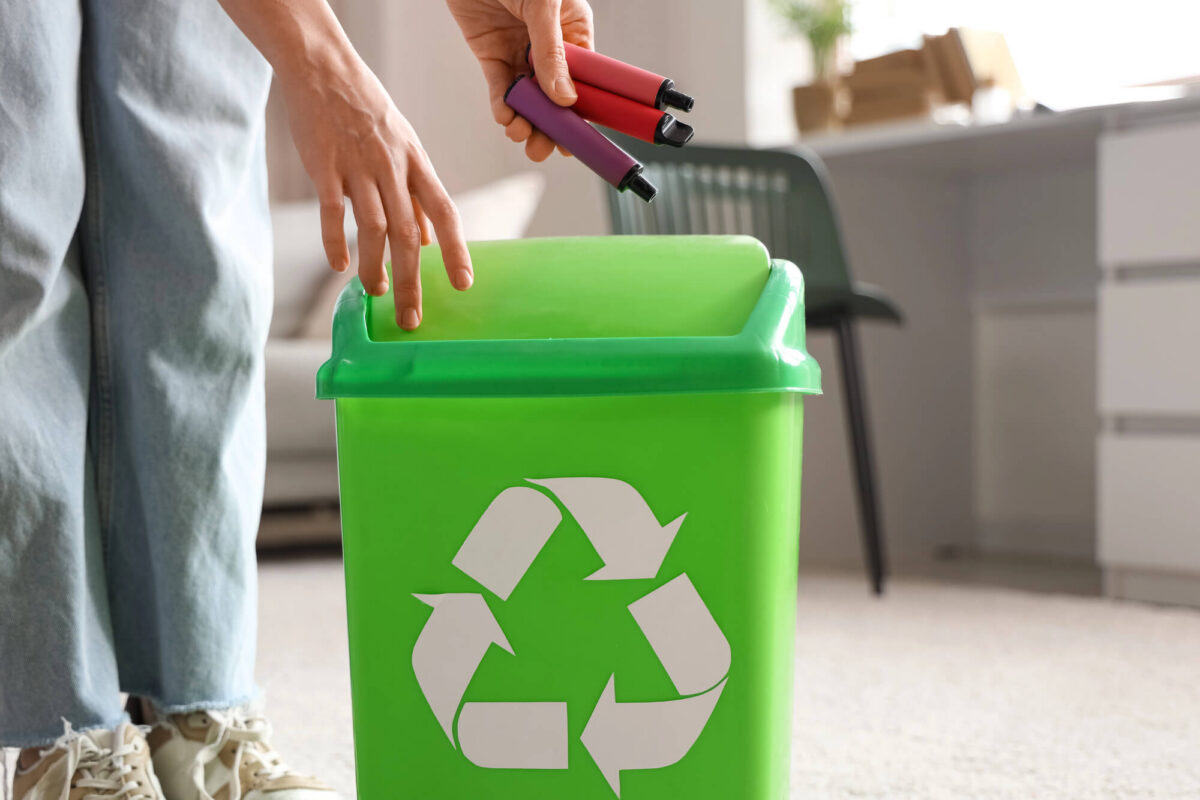
Disposable vapes and all vaping devices must not go into waste bins or recycling bins. They are classified as waste electrical and electronic equipment, meaning they require specialist electrical recycling through approved recycling centres, recycling points, or local council waste collection services.
Vapes should not be placed in household waste bins or recycling bins because they contain lithium-ion batteries and electronic components. They must be taken to recycling centres or designated recycling points for safe electrical recycling under UK waste regulations.
What Bin Do You Put Vapes In?
Vapes should never be placed in any household bin. Put them in a small electricals or battery container at a household waste recycling centre, return them to any shop that sells vapes, or use a certified vape collection unit. Every device counts as electrical waste under UK law.
What bin do you put vapes in once a device dies?
Millions of people search for this every month, and the confusion is understandable. A vape feels like everyday rubbish, yet it is legally classed as waste electrical and electronic equipment. That single fact changes everything about how you should get rid of it.
Disposable vapes and rechargeable vaping devices contain a lithium-ion battery, a circuit, and nicotine residue. None of these can be processed through kerbside waste collection. The only compliant routes are recycling centres, retailer take-back schemes, and certified vape recycling bins installed at businesses and venues.
Why Vapes Never Go in General Waste Bins
Hidden inside the plastic shell, a lithium cell stores enough energy to ignite if it is punctured or crushed. Compactors in collection lorries apply exactly that kind of pressure. Fires in bin lorries caused by batteries have surged across the UK, with Material Focus recording more than 1,200 such incidents in a single year. Each blaze endangers crews, destroys vehicles, and can shut a sorting facility for days.
Chemical leakage creates a slower, quieter problem. Nicotine residue and battery electrolytes seep from broken devices in landfills, contaminating soil and waterways long after the vape itself is forgotten.
Where Do You Dispose of Vapes?
The destination is always a dedicated electrical container, and you have three compliant choices.
Your local household waste recycling centre operates a marked cage or tub for small electricals. Hand the device to a member of staff if you cannot spot it, and they will route it to a licensed treatment plant. Local councils list site opening hours and accepted items on their websites, so a quick check before travelling saves a wasted trip.
Retailer take-back is the second route. Under UK regulations, every shop selling vaping devices must accept used ones free of charge, even when the original purchase happened elsewhere. Supermarkets, pharmacies, and specialist stores now position recycling points near tills or entrances for exactly this reason.
The third option suits workplaces, pubs, schools and event venues: on-site certified containers supplied through electrical recycling programmes that bundle in scheduled collections. Staff simply drop devices in, and full units are exchanged and transported to an approved facility without anyone handling hazardous parts.
A vital safety note: never attempt to battery recycle a vape by prising it apart. Piercing the cell can trigger thermal runaway instantly. The whole unit goes in, intact.
What Happens to a Vape After You Recycle It
Understanding the journey makes the effort feel worthwhile. At the treatment plant, technicians discharge and extract the battery first, since it carries the greatest risk. Shredders then separate the remaining body into plastic, steel, copper, and aluminium streams. Each material heads back into manufacturing; recovered lithium alone can supply new battery production, reducing demand for freshly mined ore.
Why Vapes Cannot Go in Normal Waste Bins
Disposable vapes and rechargeable vaping devices contain a lithium-ion battery, plastic casing, and internal circuits that make them hazardous in general waste streams. When placed in waste bins, they can be crushed during waste collection, which increases the risk of fires in bin lorries and processing facilities.
Standard recycling bins are also unsuitable because they are not designed for waste electrical and electronic equipment. These systems cannot safely process battery components or electronic circuits, which is why specialist handling is required.
Correct Disposal Through Electrical Recycling Systems
The correct disposal route for vaping devices is through electrical recycling systems designed for small electricals. These systems separate valuable materials such as lithium, copper, and plastic for reuse, reducing environmental impact and supporting sustainable waste management.
Recycling centres and recycling points across the UK accept vaping devices as part of regulated waste electrical and electronic equipment processing. Local councils often guide where to find your nearest approved facility for safe disposal.
Disposable Vapes and Safe Handling
Disposable vapes should always remain intact and must never be dismantled. Once they stop working, they should be stored safely and taken to a recycling point or household waste recycling centre. These facilities ensure controlled processing of battery components and prevent harmful substances from entering landfills.
Environmental Impact of Improper Disposal
Incorrect disposal of vaping devices creates a significant environmental impact. When thrown into waste bins or recycling bins, lithium-ion batteries can break and release harmful chemicals. This not only pollutes the environment but also increases the risk of fires in bin systems during waste collection and sorting processes.
Improper disposal also wastes valuable materials that could otherwise be recovered through electrical recycling. Metals and plastics inside vaping devices can be reused, reducing the need for new raw material extraction and lowering overall environmental pressure.
Safe Options for Recycling Vapes in the UK
The safest way to dispose of vaping devices is through approved recycling centres, recycling points, or household waste recycling centre facilities. These locations are equipped to handle small electricals and waste electrical and electronic equipment safely.
Local councils often support collection schemes that allow residents to drop off vaping devices responsibly. Many retailers also participate in take-back programmes that ensure safe processing of batteries and electronic components.
Additional information about electrical recycling systems and sustainable waste solutions can be found at electrical recycling information, which explains how waste is processed through controlled recycling networks.
Why Proper Vape Disposal Matters
Correct disposal of vaping devices reduces environmental harm and improves public safety. It prevents contamination caused by battery leakage and reduces pressure on landfill sites. It also helps prevent accidents linked to fires in bin trucks and waste processing centres, which are increasingly associated with lithium-ion battery waste.
By using recycling centres and approved recycling points, individuals support safer waste management systems and contribute to circular economy practices where materials are reused instead of discarded.
Summary of Safe Practice
Understanding what bin you put vapes in is essential for responsible waste handling. Vapes should never go into waste bins or recycling bins. Instead, they must be taken to recycling centres, recycling points, or handled through local council waste electrical and electronic equipment schemes. This ensures safe battery recycling processes, reduces environmental impact, and prevents fire hazards while supporting sustainable resource recovery.